Computer Privacy Screen vs Anti-Photography Screen: Which Solution Provides Better Visual Security?
Release time: 2026-07-07
As businesses become increasingly dependent on digital information, protecting sensitive data is no longer limited to network security and access control. A confidential document displayed on a monitor can still become a security risk when viewed by unauthorized people or captured by cameras.
Traditional visual protection tools such as privacy filters have helped reduce accidental screen exposure, but modern workplaces face more complex threats, including visual hacking, smartphone photography, and unauthorized recording. This has created demand for more advanced display protection technologies.
Understanding the difference between a computer privacy screen and an anti-photography screen is essential for organizations that need reliable visual data protection. While both solutions improve screen confidentiality, they are designed to address different levels of security challenges.
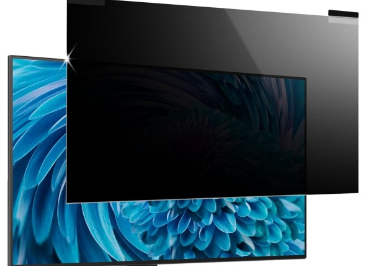
Computer Privacy Screen and Anti-Photography Screen: Two Different Security Approaches
At first glance, a privacy screen and an anti-photography screen may appear similar because both are designed to protect information displayed on a monitor. However, their protection methods are fundamentally different.
A traditional privacy screen mainly focuses on restricting the viewing angle. Through optical micro-louver technology, it allows the person directly in front of the monitor to see the content clearly while making the screen appear dark or unreadable from side angles.
An anti-photography screen goes beyond viewing-angle protection. It focuses on preventing unauthorized image capture by cameras and mobile devices, creating an additional layer of visual security for highly confidential environments.
The key difference can be summarized as:
| Protection Technology | Primary Function | Suitable Applications |
|---|---|---|
| Computer Privacy Screen | Blocks side-angle viewing | Offices, shared workspaces, personal computers |
| Anti-Photography Screen | Prevents unauthorized camera capture | Government, finance, R&D, military, confidential departments |
As remote work, open offices, and mobile device usage continue to increase, companies need to consider not only who can see their screens but also who can capture and distribute the information.
How Does a Traditional Computer Privacy Screen Work?
A computer privacy screen is commonly based on optical filtering technology that controls the viewing angle of a display.
The most widely used technology is a micro-louver structure, which contains extremely small vertical optical layers. These layers control light transmission so that the monitor remains visible from the front while limiting visibility from the sides.
The main advantages include:
- Reducing shoulder surfing risks in public areas
- Protecting confidential emails, reports, and business documents
- Improving privacy in open-plan offices
- Supporting employees working in airports, cafes, or shared spaces
For everyday business environments, a monitor privacy screen provides an effective and affordable solution.
However, traditional privacy filters have limitations. They mainly prevent people from directly viewing the screen, but they cannot fully stop someone from using a smartphone or camera to record the display.
For example, an employee working on financial data in a public environment may block side views successfully, but a person standing behind them could still attempt to capture the screen content with a high-resolution camera.
This is where advanced visual security technologies become increasingly important.
Why Is Anti-Photography Screen Technology Becoming More Important?
Modern information leakage is no longer limited to traditional cyber attacks. Physical exposure of digital information has become a growing concern for enterprises.
According to the concept of visual hacking prevention, confidential information can be obtained simply by observing or photographing an employee’s screen. Unlike network attacks, this type of security risk is often difficult to detect.
An anti photography screen addresses this challenge by introducing additional protection mechanisms designed to interfere with unauthorized image capture.
Its benefits include:
1. Protection Against Camera-Based Data Theft
Smartphones have made unauthorized recording easier than ever. A person can capture sensitive information within seconds without installing any software or accessing company networks.
Anti-photography technology helps reduce this risk by limiting the ability of cameras to obtain usable images from the display.
2. Stronger Protection for Confidential Industries
Industries handling sensitive information require higher levels of security.
Typical applications include:
- Banking and financial institutions
- Government offices
- Research and development centers
- Healthcare organizations
- Defense-related industries
- Corporate meeting rooms
In these environments, preventing unauthorized viewing alone may not be enough. Companies also need solutions that address screen photography and information replication risks.
3. Supporting Modern Enterprise Security Strategies
Cybersecurity strategies increasingly include physical information protection. A secure workplace requires multiple layers of defense:
- Network security
- Device management
- Access control
- Visual data protection
Display security solutions complement existing cybersecurity systems by protecting information at the moment it appears on the screen.
Computer Privacy Screen vs Anti-Photography Screen: Key Differences
Choosing between these two solutions depends on the required security level, working environment, and type of information being protected.
| Comparison Factor | Computer Privacy Screen | Anti-Photography Screen |
|---|---|---|
| Main Purpose | Prevent unauthorized viewing | Prevent viewing and camera-based capture |
| Protection Method | Optical viewing angle control | Advanced visual security technology |
| Security Level | Standard privacy protection | Higher confidential information protection |
| Main Risk Addressed | Shoulder surfing | Visual hacking and screen photography |
| Typical Users | Office workers, individuals | Enterprises, government, research organizations |
| Cost Level | Lower investment | Higher security value |
For general office privacy, a standard privacy screen may provide sufficient protection. However, organizations managing confidential information should consider stronger solutions.
Which Solution Is Better for Enterprise Visual Security?
The answer depends on the sensitivity of the displayed information.
For employees handling ordinary business documents, customer communication, or daily office tasks, a traditional privacy screen can effectively reduce accidental exposure.
For organizations dealing with valuable intellectual property, financial records, customer data, or classified information, a more advanced solution is necessary.
A Computer Monitor Anti-peeping Screen combines privacy protection concepts with advanced visual security requirements. It is designed for users who need more than simple side-angle blocking and require stronger protection against unauthorized observation and photography.
Key application scenarios include:
- Financial transaction centers
- Secure operation rooms
- Corporate R&D departments
- Government offices
- Medical information management areas
By integrating visual protection into workplace security systems, companies can reduce risks caused by human observation and unauthorized recording.
Why Choose PC Privacy Screen for Advanced Display Protection?
PC Privacy Screen focuses on developing professional visual security solutions designed for modern information protection requirements.
The company’s Computer Monitor Anti-peeping Screen provides businesses with a dedicated solution for protecting confidential information displayed on computer monitors. Instead of relying only on traditional viewing-angle restrictions, it addresses broader challenges including visual hacking prevention and anti-photography protection.
For enterprises that require reliable screen confidentiality, choosing the right display protection technology is an important step toward building a complete information security framework.
With professional expertise in privacy display technology and customized protection solutions, PC Privacy Screen helps organizations create safer digital working environments.
FAQ
1. What is the difference between a computer privacy screen and an anti-photography screen?
A computer privacy screen mainly prevents people from viewing a monitor from side angles, while an anti-photography screen provides additional protection against unauthorized camera capture. Anti-photography solutions are designed for environments where information leakage risks are higher.
2. Can a privacy screen prevent someone from taking a photo of my monitor?
Traditional privacy screens can reduce visibility from different angles, but they are not specifically designed to prevent camera recording. Organizations requiring stronger protection should consider an anti-photography display solution.
3. Who needs an anti-photography screen?
Anti-photography screens are suitable for industries that handle sensitive information, including finance, government, healthcare, research, and enterprise security departments.
4. Does a computer monitor privacy screen affect display quality?
High-quality privacy screens are designed to maintain clear front viewing while reducing visibility from side angles. Proper optical design helps balance privacy protection and display performance.
5. How does a Computer Monitor Anti-peeping Screen improve workplace security?
A Computer Monitor Anti-peeping Screen helps prevent unauthorized viewing and reduces the risk of visual information leakage, providing an additional security layer beyond traditional cybersecurity methods.