


Active Privacy Monitors vs. Films: Stopping Visual Hackers
Release time: 2026-05-08
In the contemporary corporate landscape, millions of dollars are poured annually into sophisticated firewalls, zero-trust network architectures, and robust cryptographic protocols. Yet, an alarming systemic vulnerability remains completely exposed in plain sight: the physical computer screen. Every day, sensitive financial records, proprietary source code, and strategic corporate roadmaps are displayed in high resolution, vulnerable to anyone walking past an office window or standing in a corridor.
This vulnerability has given rise to a highly pervasive threat vector known as visual hacking. Traditionally, organizations attempted to mitigate this risk by deploying cheap, passive plastic overlays. However, as recording technology undergoes an unprecedented technological leap, these legacy countermeasures have become fundamentally obsolete. The era of casual shoulder surfing has transitioned into an era of targeted digital surveillance, demanding a paradigm shift from passive attenuation to intelligent, hardware-level active defense.
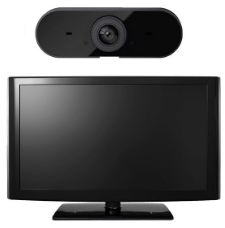
The Evolution of Visual Hacking: Beyond the Casual Glance
The threat landscape of visual data theft has shifted dramatically from nosy coworkers to weaponized consumer optics. Modern smartphones equipped with high-resolution sensors, optical zoom lenses, and AI-driven text extraction can capture legible on-screen data from dozens of meters away. Furthermore, the proliferation of ultra-compact pinhole cameras, smart video glasses, and covert wearable recorders means that an adversary no longer needs to stand suspiciously close to an employee’s desk to execute a successful data breach.
Traditional privacy filters operate on a basic optical principle: micro-louver technology. These microscopic vertical blinds block light outside a narrow viewing angle (typically 30 degrees to either side). While moderately effective against a human eye positioned at an acute side angle, they offer zero protection from the front. A bad actor positioned directly behind an employee—or a high-definition security camera mounted on a ceiling—retains a completely unobstructed view of the display. Because micro-louvers merely tint or blur the peripheral view, modern camera lenses with advanced computational photography can easily resolve the underlying text, rendering passive security sheets practically useless against deliberate espionage.
Passive Privacy Films vs. Active Defense Monitors: A Technical Breakdown
To understand why a hardware-integrated system is superior, one must analyze the physics of modern optical sensors. Standard recording devices rely on Complementary Metal-Oxide-Semiconductor (CMOS) sensors to capture light and convert it into digital images. Passive films do nothing to alter or disrupt the electronic processing of these sensors; they simply reduce the total light output, which smartphone night-modes can easily compensate for by adjusting ISO and exposure times.
In contrast, an integrated computer monitor privacy screen utilizes a proactive, hardware-driven approach. Instead of merely blocking light, it introduces a sophisticated photon matrix embedded directly behind the glass panel. This matrix emits specific, variable optical patterns that are perfectly synchronized to clash with the refresh rates and electronic shutters of modern digital cameras.
By deploying a targeted DLA interference frequency of 8300, the display injects specialized electronic noise into any external optical recording system. When a smartphone or pinhole camera attempts to focus on the active display, the CMOS sensor experiences severe signal oversaturation and aliasing. The resulting recorded video or photograph is forced to be completely unreadable, characterized by intense flickering, black bars, and severe moiré patterns. Yet, because the human eye possesses a completely different integration time than electronic sensors, the legitimate user experiences a crystal-clear, uninterrupted 1024-level high-definition view. This groundbreaking anti-photography screen protection system ensures that information remains accessible to the naked eye while becoming completely invisible to digital lenses.
Comparative Performance Metrics: Enterprise Security Shielding
To assist Chief Information Security Officers (CISOs) and IT procurement managers in evaluating risk mitigation strategies, the following matrix compares legacy passive films against advanced active hardware systems:
| Security Parameter | Legacy Passive Privacy Films | Advanced Active Defense Privacy Monitor |
| Primary Mechanism | Micro-louver light blocking (angles >30°) | Photon matrix & DLA electronic CMOS interference |
| Frontal Protection | Completely vulnerable (0% mitigation) | Full active defense against digital recording devices |
| Device Neutralization | None (Cameras easily bypass via zoom) | Neutralizes smartphones, spy glasses, and pinhole lenses |
| Visual Quality Impact | Reduces brightness by 30-40%; causes eye strain | 100% native HD clarity, intelligent light adaptability |
| Forensic Capabilities | None (Passive asset) | Web-based forensic tracking via RJ45 network interface |
| Algorithm Future-Proofing | Static physical plastic; cannot adapt to new tech | Permanent algorithm upgrades against new CMOS sensors |
Implementation Scenarios: Where Hardware-Level Security is Mandatory
The adoption of an active defense privacy monitor is no longer a luxury—it is an absolute compliance requirement for environments handling critical, high-value data assets.
- Financial Institutions and Trading Floors: In banking and investment sectors, trading screens display real-time portfolio shifts, market-moving algorithms, and sensitive client net-worth data. A single leaked photograph of a terminal screen can lead to catastrophic regulatory fines and insider trading vulnerabilities.
- Government and Defense Sectors: Tactical operation centers, state intelligence offices, and administrative departments process highly classified national security data. Passive films can easily be bypassed by high-zoom surveillance equipment positioned outside windows, making hardware-level CMOS disruption the only viable physical shield.
- Corporate R&D and Executive Offices: Intellectual property is the lifeblood of modern technology and pharmaceutical firms. Boardrooms and engineering bays where unreleased product schematics, chemical formulas, or mergers and acquisitions (M&A) documents are reviewed require absolute immunity from smartphone-wielding corporate espionage threats.
Conclusion: Securing the Last Inch of Your Physical Perimeter
Network security is only as strong as its weakest link. If an adversary can bypass millions of dollars in cybersecurity infrastructure simply by pointing a smartphone camera at a workstation display, your data is fundamentally unsecure. True data sovereignty requires moving past inadequate, easily detached plastic sheets and adopting permanent, intelligent hardware protection.
As a pioneer in advanced optical security solutions, Shenyang Sheng Hunting Software Technology Co., Ltd. has engineered the definitive answer to modern visual hacking. Our integrated anti-peeping display systems combine pristine, uncompromised visual ergonomics for employees with ruthless, automated neutralization of unauthorized recording devices. Protect your enterprise, secure your intellectual property, and close the physical screen loophole permanently by partnering with an industry leader in active optical defense.
FAQ
Q:What is the difference between an active privacy monitor and a standard privacy film?
A:A standard privacy film uses passive micro-louvers that block vision from side angles but leave the front completely vulnerable to eyes and cameras. An active privacy monitor integrates a hardware-driven photon matrix and DLA interference technology directly into the display panel, emitting synchronized optical patterns that actively disrupt the CMOS sensors of digital cameras, making it impossible to photograph or record the screen from any angle.
Q: Can digital cameras bypass active anti-photography screen protection?
A: No. The active system operates at a high-intensity DLA interference frequency of 8300 specifically calibrated to target the electronic shutters and CMOS capture systems of modern smartphones, micro video recorders, smart video glasses, and pinhole cameras, forcing the resulting image to be corrupted and incomplete.
Q:Does an active privacy display cause eye strain for the user?
A: No. Because human vision integrates light differently than electronic CMOS sensors, the active optical interference is completely invisible to the naked human eye. Users enjoy a clear, high-definition 1920*1080 display with native brightness and automatic light adaptability, completely eliminating the dimness and eye strain caused by legacy plastic films.

