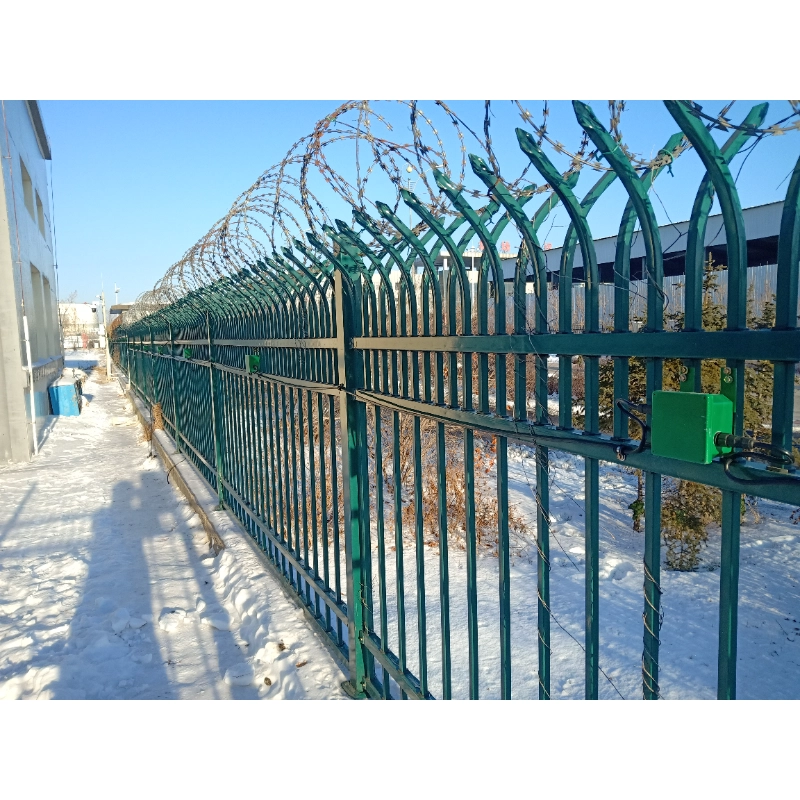
How Intelligent Ground Sensors Stop Perimeter Breaches
Release time: 2026-05-21
Securing critical infrastructure requires more than basic fences. Modern intruders can easily bypass traditional physical barriers by utilizing covert climbing, cutting, or subterranean tunneling techniques.
To effectively counter these evolving threats, enterprise security demands invisible, proactive intelligence. Facilities must detect, classify, and neutralize physical threats before the perimeter is actually compromised.
The Hidden Vulnerabilities of Legacy Perimeter Defenses
For decades, security integrators and facility managers relied heavily on active infrared (AIR) beams, microwave barriers, and standard tension wires to monitor fence lines. While these legacy systems provided a foundational layer of security, they share several fatal operational flaws that modern threat actors easily exploit.
- Unacceptable Nuisance Alarm Rates (NAR): Legacy sensors operate on basic threshold triggers. Heavy rain, dense fog, falling branches, or wandering local wildlife frequently interrupt optical beams or trigger vibration wires. This constant barrage of false positives causes “alarm fatigue,” leading security personnel to ignore alerts or lower system sensitivity, thereby creating massive blind spots.
- Line-of-Sight Limitations: Infrared and microwave systems require a clear, unobstructed line of sight. An intruder with basic tactical knowledge can easily crawl beneath an optical beam or pole-vault over a microwave barrier, completely evading detection.
- Vulnerability to Sabotage: Traditional sensors require visible mounting brackets, pillars, and power lines. Because they are highly conspicuous, bad actors can map their locations during pre-attack reconnaissance and physically disable them before initiating a breach.
Decoding the Intelligent Ground Effect Detector
To solve the inherent physics limitations of line-of-sight sensors, the physical security industry has shifted toward spatial awareness driven by seismic and acoustic engineering. The Intelligent Ground Effect Detector represents a paradigm shift in how we monitor boundaries. Instead of looking for a broken beam of light, this technology listens to the earth and the physical structures themselves.
- Micro-Electro-Mechanical Systems (MEMS): At the core of this system are hyper-sensitive MEMS sensors. These microscopic devices measure physical pressure, spatial vibration, and acoustic resonance with extraordinary precision. They can detect microscopic shifts in the soil or the subtle metallic resonance of a fence wire being stressed.
- Invisible Deployment Architecture: True security is covert. These sensor cables and detection nodes can be completely buried beneath gravel, asphalt, or dirt around a facility’s perimeter. Alternatively, they can be seamlessly woven inside the core of a chain-link or mesh fence. Because the system is entirely hidden, intruders cannot visually identify the detection zones, making it impossible to circumvent.
- Omnidirectional Spatial Sensing: Unlike a laser beam that monitors a single 2D line, ground effect sensors monitor a 3D volumetric space. The system captures acoustic waves traveling through the ground (detecting footsteps and digging) as well as mechanical waves traveling through the fence lattice.
How the Anti-Climbing Technology Works
Stopping an intruder from scaling a wall requires real-time structural analysis. An advanced Anti-climbing Perimeter Intrusion Detection System goes far beyond basic vibration detection. It utilizes edge computing and sophisticated algorithmic filtering to understand exactly what is happening to the perimeter boundary.
- Structural Stress Monitoring: When a human attempts to climb a fence, their body weight creates a highly specific, low-frequency stress signature on the metal structure. The ground effect sensors instantly calculate this weight transfer, triggering a pre-alarm long before the intruder even reaches the top of the fence.
- AI-Driven Acoustic Signature Filtering: To eliminate false alarms, the raw data from the sensors is processed through a proprietary machine-learning algorithm. The AI uses Fast Fourier Transform (FFT) to break down the vibrations. It can instantly distinguish the rhythmic, heavy impact of human footsteps from the erratic scurrying of an animal, or separate the sharp, metallic snap of a bolt cutter from the random rattling caused by high winds.
- Seamless VMS Integration: Upon verifying a legitimate human threat, the system instantly communicates with the facility’s Video Management System (VMS). PTZ (Pan-Tilt-Zoom) cameras are automatically slewed to the exact GPS coordinates of the disturbance, providing the Security Operations Center (SOC) with immediate visual verification of the climbing or cutting attempt.
Technical Comparison: Advanced Sensors vs. Legacy Barriers
To assist Chief Security Officers (CSOs) in upgrading their physical architectures, the following matrix compares legacy solutions against modern intelligent ground hardware:
| Performance Metric | Legacy Infrared / Microwave Barriers | Intelligent Ground Effect Systems |
| Detection Methodology | Line-of-sight optical or radio frequency | Volumetric seismic, pressure, and stress analysis |
| False Alarm Immunity | Poor (Highly susceptible to weather and animals) | Excellent (AI filters non-human environmental noise) |
| Anti-Climbing Capability | None (Intruders simply vault over the beam) | Superior (Detects human weight stress in real-time) |
| Subterranean Defense | None (Cannot detect tunneling) | Excellent (Detects underground digging vibrations) |
| Aesthetic & Covertness | Highly visible poles and transmitter boxes | 100% invisible (Buried underground or inside fences) |
| Weather Resilience | Fails in dense fog, heavy snow, or sandstorms | Completely immune to all extreme weather conditions |
Strategic Implementations Across High-Risk Sectors
Deploying a highly accurate fence intrusion detection sensor is a mandatory compliance requirement for critical infrastructure where a physical breach could result in catastrophic operational failure or national security threats.
- Hyperscale Data Centers: Server farms house petabytes of proprietary corporate data. Securing the physical perimeter with buried covert sensors ensures that corporate espionage actors or saboteurs are intercepted before they can reach the server halls.
- Power Grids and Remote Substations: Electrical utility sites are prime targets for copper theft and terrorist sabotage. Because these sites are often unmanned, they require intelligent sensors that filter out wildlife while immediately alerting central command to a human cutting through the outer perimeter.
- Correctional Facilities and Borders: Prisons require a dual-layer defense. Ground effect sensors not only detect inmates attempting to scale the inner fences but also pinpoint subterranean acoustic signatures from attempted escape tunnels.
Secure Your Perimeter with Unmatched Precision
A physical fence is merely a psychological deterrent; true security requires intelligent verification. If your facility relies on outdated line-of-sight sensors, you are leaving your most critical assets exposed to targeted physical attacks and suffering from daily alarm fatigue.
PC Privacy Screen is a leading innovator in advanced perimeter security hardware. Our intelligent ground effect detection solutions combine military-grade covert installation with cutting-edge AI algorithmic filtering to deliver absolute situational awareness. We empower enterprise security teams to detect, classify, and stop intruders accurately and silently. Upgrade your physical security infrastructure today and transform your static boundaries into an impenetrable, intelligent shield.
FAQ
Q: What exactly is an Intelligent Ground Effect Detector?
A: It is a covert perimeter security system that uses highly sensitive MEMS and seismic sensors to monitor a physical boundary. Deployed underground or integrated into fences, it measures the microscopic pressure, vibrations, and acoustic resonance caused by an intruder’s footsteps, digging, or climbing, while remaining completely hidden from view.
Q: How does the system prevent false alarms caused by animals or harsh weather?
A: The system utilizes advanced machine learning and AI edge computing. Instead of triggering an alarm based purely on volume or impact, the AI analyzes the distinct acoustic signature, frequency, and pattern of the vibration. It perfectly filters out random environmental noise (like wind or rain) and animal movements, isolating only human-generated threats.
Q: Can a sophisticated intruder bypass an anti-climbing detection system?
A: No. Unlike traditional infrared beams that can be crawled under or jumped over, the intelligent ground system monitors volumetric space and structural stress. Any physical attempt to scale the fence, cut the mesh, or dig a tunnel beneath the sensor line alters the physical resonance of the environment, instantly triggering a localized alarm.