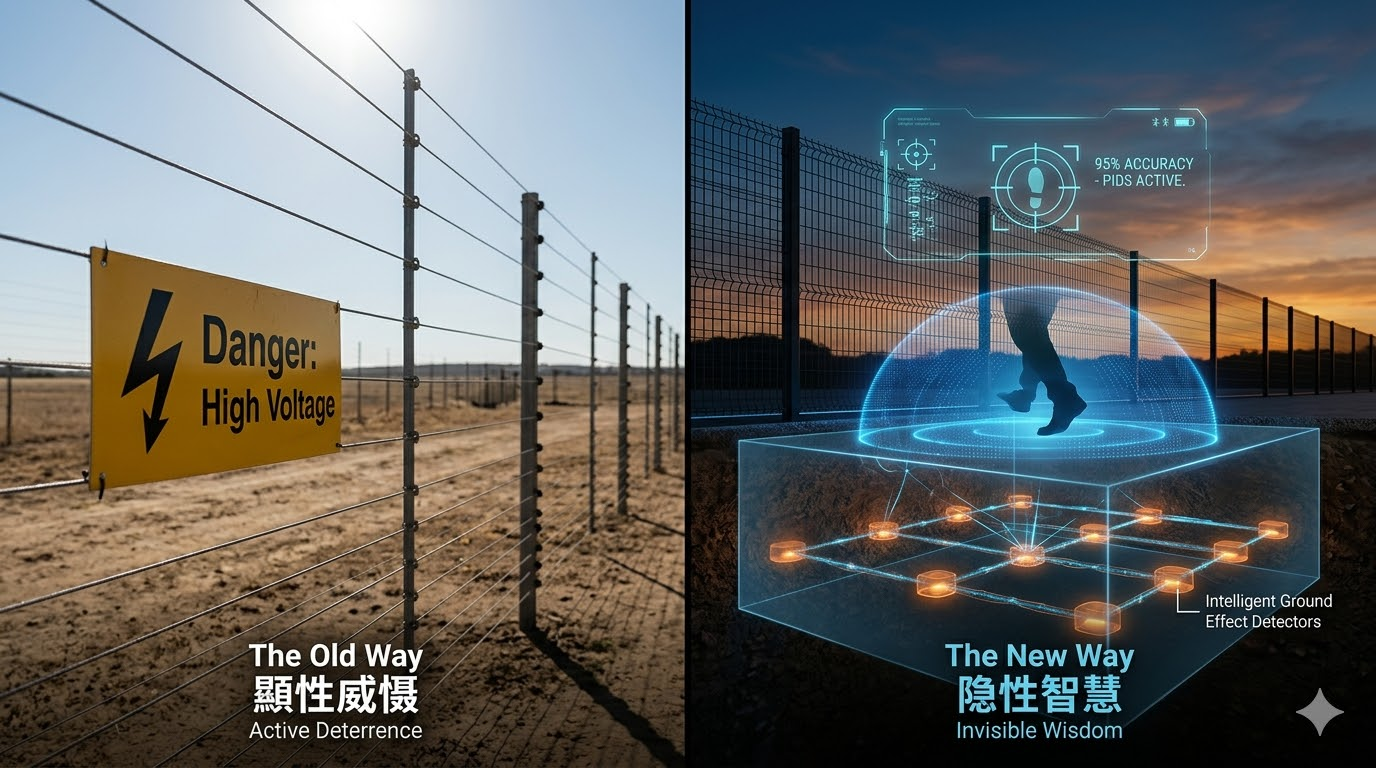
How Ground Sensors Detect Intruders Before They Reach the Fence
Release time: 2026-06-04
Perimeter security has evolved significantly over the past decade, yet many facilities still rely heavily on fences, surveillance cameras, and motion detectors as their first line of defense. While these systems remain valuable, they often identify threats only after an intruder has already reached the protected boundary.
For critical infrastructure, industrial facilities, data centers, military installations, and energy sites, even a few seconds of delayed detection can create significant security risks. This challenge has driven growing interest in advanced ground-based sensing technologies capable of identifying suspicious activity before physical barriers are ever touched.

Why Traditional Perimeter Security Has Detection Gaps
Most conventional security systems are reactive by nature.
A fence alarm typically activates when someone attempts to cut, climb, or damage the fence. Video surveillance systems often depend on visual confirmation, which can be affected by weather conditions, lighting changes, vegetation, or blind spots.
Common limitations include:
- Detection occurs only after perimeter contact
- Increased false alarms caused by animals or environmental conditions
- Reduced performance during fog, rain, or darkness
- Limited early-warning capability
- High monitoring workload for security personnel
As a result, security teams may have very little time to assess and respond to a genuine threat.
What Are Intelligent Ground Sensors?
Intelligent ground sensors are advanced security devices designed to detect subtle disturbances in the ground environment caused by human movement, vehicle activity, or climbing attempts near a protected perimeter.
Unlike traditional fence-based solutions, these systems create an invisible detection zone around the perimeter.
By continuously monitoring changes in ground-effect signals and movement patterns, the system can distinguish between legitimate activity and potential intrusion events.
This approach transforms perimeter security from a reactive model into a proactive early-warning system.
How Ground Effect Detection Technology Works
At the core of modern ground effect intrusion detection systems is the ability to recognize environmental changes generated by approaching targets.
The detection process generally follows several stages:
Signal Collection
Ground sensors continuously monitor micro-level disturbances within the protected area.
These disturbances may originate from:
- Human footsteps
- Running movements
- Vehicle vibrations
- Climbing preparations
- Unauthorized perimeter approach
Intelligent Signal Analysis
Advanced algorithms evaluate collected signals in real time.
Instead of simply detecting movement, the system analyzes:
- Movement patterns
- Signal intensity
- Direction of travel
- Behavioral characteristics
- Duration of activity
This helps minimize nuisance alarms while improving detection accuracy.
Threat Classification
The system categorizes detected activity and determines whether it represents a legitimate security threat.
Potential intrusion events can then trigger:
- Local alarms
- Security control center notifications
- Video surveillance integration
- Access control responses
- Automated incident workflows
Ground Sensors vs Traditional Fence Detection
The difference between early detection and perimeter-contact detection can be substantial.
| Security Factor | Ground Sensor Detection | Traditional Fence Detection |
|---|---|---|
| Detection Timing | Before fence contact | At fence contact |
| Early Warning Capability | High | Limited |
| Response Time | Longer | Shorter |
| False Alarm Resistance | Advanced filtering | Often vulnerable |
| Weather Impact | Minimal | Moderate to High |
| Situational Awareness | Proactive | Reactive |
For high-security facilities, detecting an intruder several meters before they reach the fence can provide valuable response time for security personnel.
Where Ground Sensors Deliver the Greatest Value
Modern perimeter intrusion detection systems are increasingly deployed across sectors where perimeter breaches can result in operational disruption, financial losses, or public safety concerns.
Power and Energy Facilities
Substations, solar farms, and power generation sites often cover large outdoor areas.
Ground-effect detection technology helps identify unauthorized access attempts before critical assets are reached.
Data Centers
As physical security becomes increasingly important for digital infrastructure, data centers require layered protection strategies that provide early detection of perimeter threats.
Airports and Transportation Hubs
Large perimeter boundaries can create monitoring challenges.
Ground sensors provide continuous coverage without relying solely on camera visibility.
Industrial and Manufacturing Sites
Facilities containing hazardous materials, sensitive equipment, or proprietary processes benefit from rapid intrusion detection and response.
How Intelligent Ground Sensors Reduce False Alarms
False alarms remain one of the biggest challenges in perimeter security.
Frequent nuisance alerts can lead to operator fatigue, delayed responses, and unnecessary operational costs.
Modern systems address this problem through:
- Multi-layer signal analysis
- Environmental compensation algorithms
- Behavioral pattern recognition
- Intelligent threat classification
- Adaptive sensitivity adjustment
As a result, security teams receive more actionable alerts while spending less time investigating harmless events.
Why Early Detection Is Becoming the New Security Standard
Security professionals increasingly recognize that preventing perimeter breaches is far more effective than responding after an intrusion occurs.
The goal is no longer simply protecting the fence itself.
The goal is protecting the assets, personnel, and operations behind the fence.
Ground-effect detection technology extends the security perimeter outward, creating additional reaction time and enabling more informed decision-making before a threat escalates.
Strengthen Your Perimeter Security with Advanced Detection Technology
As security threats continue to evolve, organizations require smarter and more proactive approaches to perimeter protection.
PC Privacy Screen provides advanced intelligent ground effect detector solutions designed to deliver early warning capabilities, high detection accuracy, and reliable perimeter intrusion monitoring for critical infrastructure, industrial facilities, transportation hubs, and other high-security environments. By combining intelligent sensing technology with practical deployment flexibility, organizations can improve situational awareness and strengthen overall perimeter defense.
Frequently Asked Questions
Q: How do intelligent ground sensors detect intruders?
Intelligent ground sensors detect environmental disturbances caused by human movement, vehicle activity, or climbing attempts and analyze these signals using advanced algorithms to identify potential threats.
Q: Are ground sensors better than fence sensors?
Ground sensors offer earlier detection because they can identify approaching intruders before physical contact with the fence occurs. Fence sensors typically activate only after the perimeter has been touched or compromised.
Q: Can ground sensors work in bad weather?
Yes. Modern ground-effect detection systems are designed to operate reliably in various environmental conditions, including rain, fog, darkness, and temperature fluctuations.
Q: What facilities benefit most from ground sensor technology?
Critical infrastructure, power substations, airports, military bases, industrial facilities, data centers, and transportation hubs are among the most common applications.
Q: How do ground sensors help reduce false alarms?
Advanced signal processing, behavioral analysis, and intelligent threat classification allow the system to distinguish genuine intrusion attempts from environmental noise and non-threatening activities.